
In brief: Pennsylvania Senate Bill 603, which would require sites where more than a third of the material is “harmful to minors” to verify visitors’ ages, cleared the Senate Judiciary Committee Sept. 28 and second consideration Sept. 29, according to the Legislature’s bill history, which shows no further action as of Oct. 13.
Contains adult themes: this story covers the adult-content industry.
Most ID checks ask for a driver’s license. Pennsylvania’s latest age-verification bill would also accept a paper trail from your mortgage lender.
The state Senate Judiciary Committee advanced Senate Bill 603 on Monday, Sept. 28, with bipartisan support, the Pennsylvania Capital-Star reported. The Legislature’s bill history lists it as reported as amended and given first consideration that day, then second consideration Sept. 29. As of Oct. 13, it showed no further action. The sponsor, Republican Sen. Cris Dush, made his case in committee:
When it comes to the protection of children from exposure to pornography, the only verification measure, if any, is clicking a button indicating you’re 18 years old
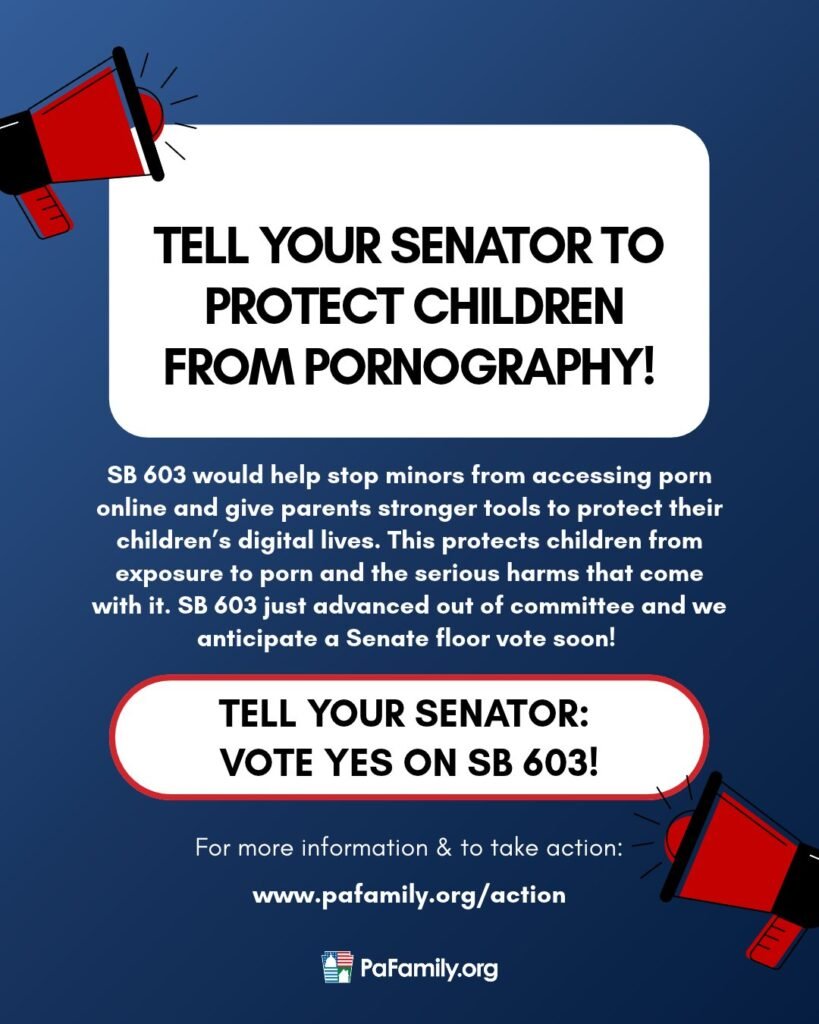
A group backing the bill, the Pennsylvania Family Institute, told supporters on X that SB 603 “just passed the Senate Judiciary Committee by a vote of 12-2, and we anticipate a floor vote soon!”
View this post on X
What the bill actually says
The amended text covers commercial sites with a “substantial portion” of material harmful to minors, defined as “More than 33.3% of total material.” Those sites would have to use a “reasonable age verification method,” meaning a third-party service that checks against commercial databases, or “any commercially reasonable method that relies on public or private transactional data.” The bill says that data “includes records from mortgage, education and employment entities.”
Sites and verifiers “shall not retain identifying information.” News organizations are exempt, and so are internet providers and search engines that merely carry the content. The law would take effect 90 days after enactment.
Who gets to sue
The text doesn’t mention enforcement by the state attorney general. Instead, a site that violates it “shall be liable to an individual for damages resulting from a minor accessing” the material, plus court costs and attorney fees. Trace Mitchell, an attorney at the Foundation for Individual Rights and Expression, told the Capital-Star that unlike Texas’ law, this one means “every website that is even arguably covered faces the threat of a lawsuit.” He added: “The cheapest way to avoid that is to put up an ID check.”
Attorney Lawrence Walters told AVN: “Every site that might be covered faces bounty-hunter litigation. Over-blocking will be the rational response.” Mike Stabile of the Free Speech Coalition said the last-minute vote on a previously stalled bill “appears to be more about election-year politics than actual policy.”
Sen. Maria Collett, one of the two no votes, said she supports the goal but worries about data. She pointed to the familiar scam emails that threaten to expose what people look at online, and said “we have to be mindful that that data collection can’t then be used as a tool to exploit you further.” Sen. Steven Santarsiero voted to advance the bill but wants changes: “I suspect this will not be the last word on this and we’ll be back.”
In 2024, a Democrat-backed age-assurance bill for social media passed the Pennsylvania House and stalled in the Senate, the Capital-Star reported. The U.S. Supreme Court upheld Texas’ age-verification law in Free Speech Coalition v. Paxton in June 2025, and the Pennsylvania Family Institute says 27 states have passed such laws since 2022. Elsewhere, Utah’s VPN fight is on hold and California now wants a sworn statement for every upload.
For now, Pennsylvanians can still clear an age gate by clicking a button. Whether that becomes a mortgage statement is up to the full Senate.